PRS Employee Spotlight - Nick Seckler // PTC Guitar Technician
17 Feb 2026
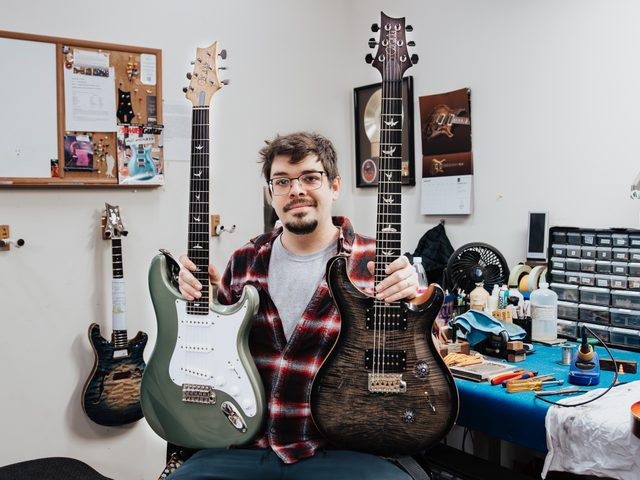
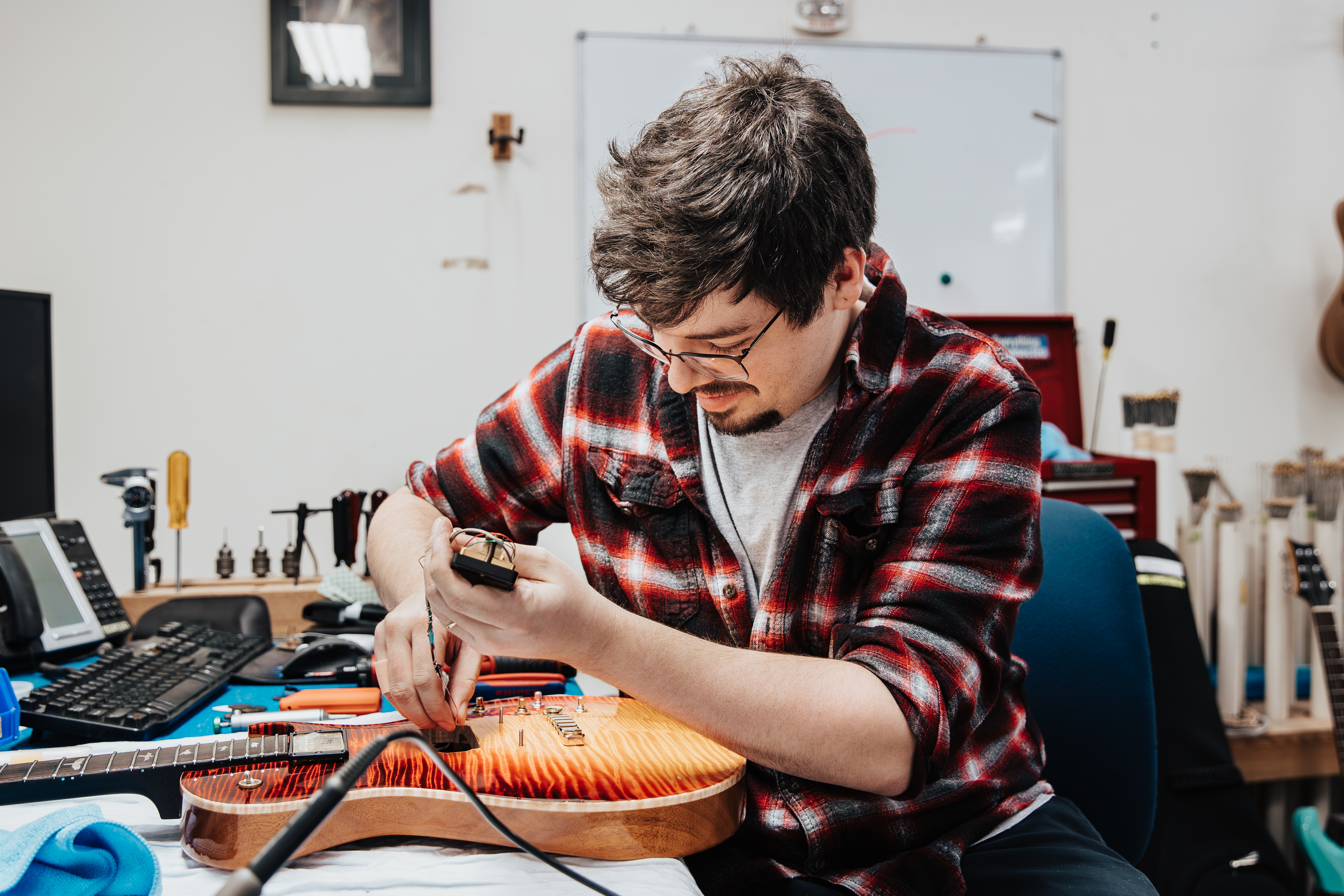
Meet Nick Seckler, a PTC Guitar Technician here at PRS. He, like many of the employees here, absolutely loves guitars. Nick gained interest in working here thanks to a Premier Guitar article about PTC (PRS Tech Center) over a decade ago that prompted him to move from New Jersey to Maryland so he could work with us here in Stevensville. The PTC is the only authorized PRS tech center (outside of our partners at PRS Europe and PRS Japan) where we repair and update PRS products for our customers!
We spent a day with Nick to show you what a day in his life looks like and sat down to ask him a couple of questions about his best memories and greatest challenges of working in the PTC. Enjoy both the Q&A and video below!
What is your job title?
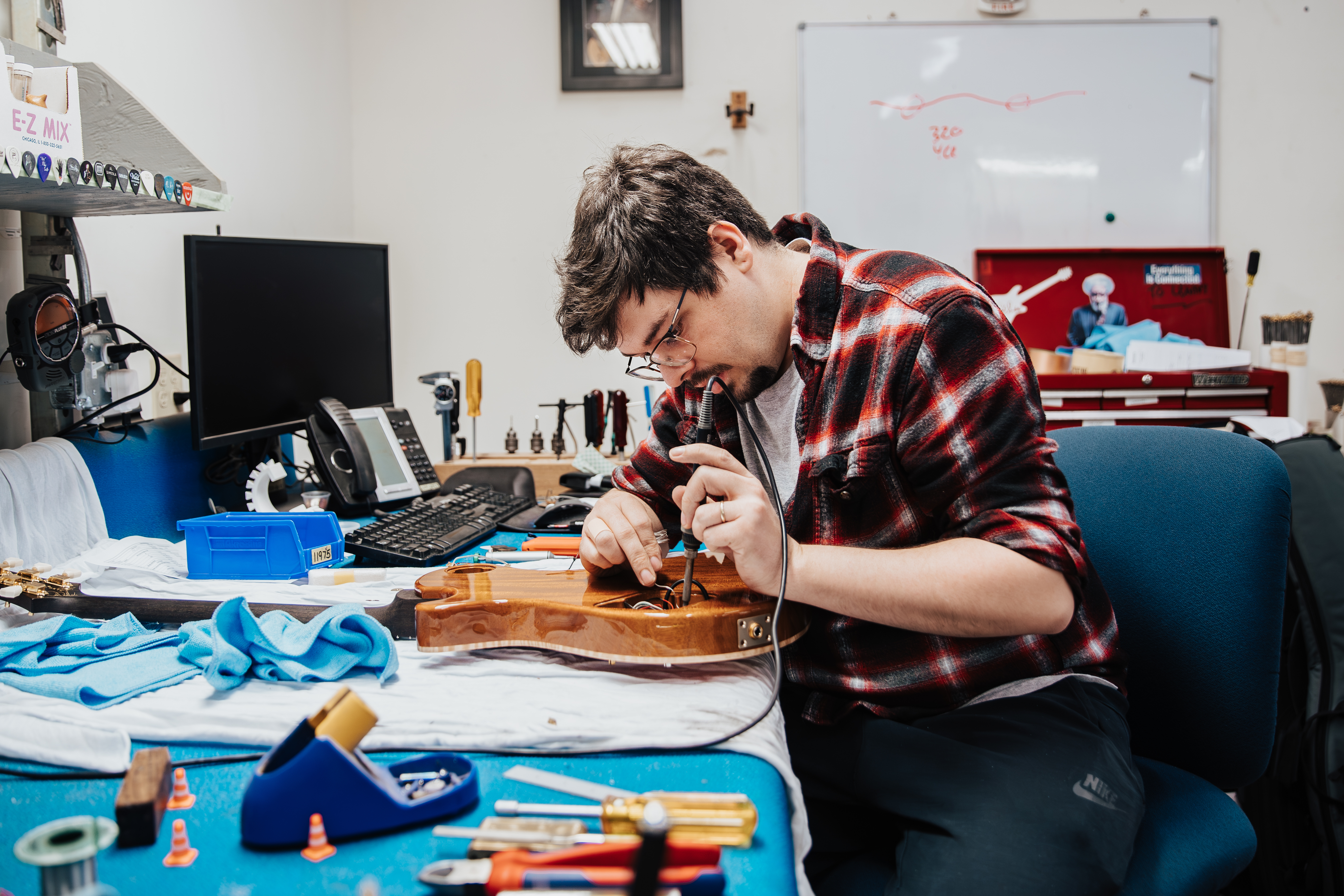
Nick: PTC Guitar Technician. At its core, PTC is a guitar repair shop. We also assemble Private Stocks, assemble and repair guitars for Artist Relations, build and test prototypes for R&D, set up guitars for PR and events, and work closely with Paul to tweak and fine tune every aspect of our guitars. We are constantly working to find new ways to improve the sound of our instruments.
How long have you been at PRS?
Nick: Twelve years (2014)
What brought you here?
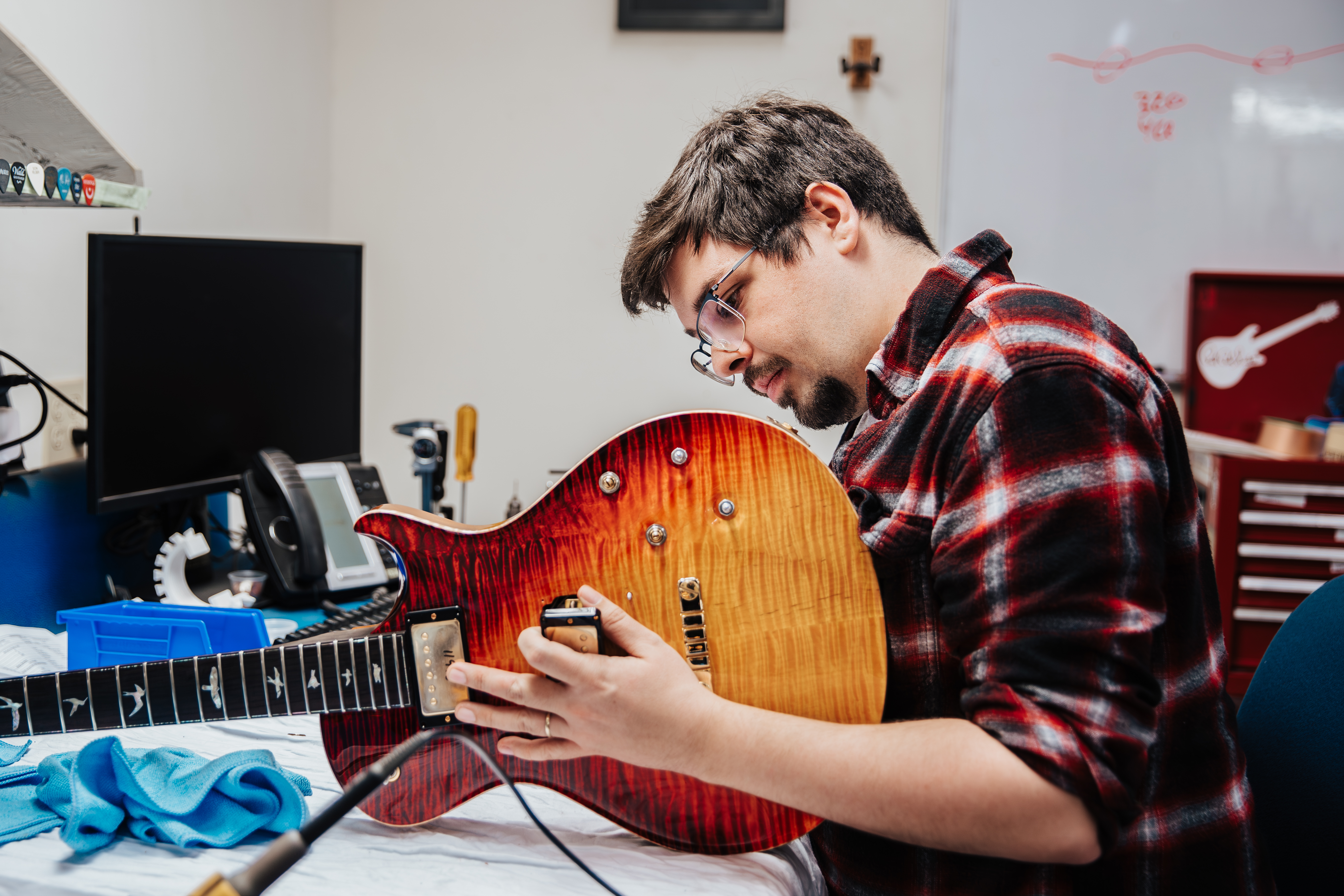
Nick: In 2013 I read an article in Premier Guitar magazine about PTC where they took an old PRS and modernized it by updating all the electronics and refinishing it. I thought that sounded like the coolest job in the world. [Spoiler alert – it is]
Have you held any other positions (at PRS) before this one?
Nick: I worked in quality control for many years. At some point, I’ve manned every QC stop from basecoat through casing.
Describe how a typical day starts for you.
Nick: We usually start the day by checking in a pallet of customer guitars. We read the customer service ticket to see what modifications the customer wants or if there is an issue they are looking to fix, then inspect the instruments and take incoming photos. I’ll enter them into our system and add them to the queue of guitars to be worked on. At this point, I’ll assess the guitars I have in progress and figure out what project has priority. Although, it's not uncommon to receive a call from Paul with some sort of project that can be anything from setting up a guitar to send to an artist to taking the pickups out of a legendary vintage guitar so we can find out why they sound so good.
What do you like most about what you do?
Nick: I get to work on a wide variety of guitars. In PTC, we see everything from SE acoustics to Private Stock dragons. Because we deal with instruments that are owned by customers, I get to see old guitars as well as new ones. I also work closely with Artist Relations as well as R&D which means getting the opportunity to work on artist-owned guitars and to build prototypes for new models. I’m an absolute guitar nerd, and I get to work on a huge variety of PRS guitars all day – what’s not to love?
What is most challenging?
Nick: Because my work comes from several different sources, time management is very important. I need to know how long something will take me to do and how to prioritize projects to meet deadlines.
Do you have any particular guitars or memories that stick out?
Nick: There are tons.. building my first employee guitar was something I’ll never forget. Going through the archive room is really cool. We have all the first guitars Paul built as well as out-of-production models, prototypes, dragons, and more. Jon Jourdan’s one-pickup guitars were terrific to work on. I recently crossed a couple of old PRS’s off my bucket list when they came in for setups – a Tremonti tribal (shoutout Damon) and a Metal guitar painted by Bud Davis.
What is it like to work alongside Paul on guitar development/refinement?
Nick: Working with Paul is a trip. I’ve never met another person who loves guitars more than Paul Reed Smith. It’s inspiring. The man has supersonic hearing - and he taught me that I could too. You just need to know what to listen for. He once asked me to set up his Charcoal Phoenix for him. When I handed it to him, I listened as he play tested it. “Too dark.” I took it back and tried a bunch of setup tweaks. Still, “too dark.” Back and forth I went, throwing every trick I had at it, to no avail. I brought it back to him just about ready to throw in the towel. He sat thoughtfully for a second and said “check the value of the volume pot. It should be 500k but I bet it’s like 460k.” I took the guitar back to my bench, hooked up the meter, and sure enough – 462kohms. That was when I knew I was in the big leagues. I was amazed he could hear such a small difference. It sent me on a personal ear training quest. I still have that volume pot at my bench.
Paul is a musician first. That’s how you really know he cares. He spends his free time writing and recording songs. The level of detail with which we scrutinize guitars would seem crazy to some. We’re in the lifelong pursuit of improvement. We want to learn as much as we can every day about creating the best possible instruments, and that means analyzing every single material or component and asking ourselves if it can be improved. We often do shootouts where we compare our guitars to the kinds of guitars that are considered the holy grails. We regularly have guitars around from the “golden era” of the electric guitar. The kind of thing most stores don’t keep on the walls for the general public to see. It’s our goal to make our guitars better than these and to make it repeatable. I think we do a great job at that because Paul’s standards are high. If I hand him a guitar that isn’t up to snuff, he’s gonna let me know it’s not good enough. That makes it really rewarding when he’s blown away by a guitar I’ve built.
How do you end your work day?
Nick: When it’s time to wrap up, I’ll check my emails to see if there are any updates to repair tickets from customer service. Alex or Dain will usually bring up a new pallet of customer guitars from the receiving warehouse. They bring up a checklist of serial numbers so we can make sure no guitars get lost. Sometimes, customer service agents stop by and ask technical questions to help customers. Then, I’ll clean up my area and shut down for the day.
Do you play guitar, how has guitar impacted your life?
Nick: I’ve been playing guitar since I was 9 years old. My dad plays guitar, so he got me started early. I started writing and recording songs when I was 15. After high school, I went to Galloup School of Luthiery. I then built and repaired guitars with Ian Kelly at Kelly Custom Instruments, and I did repairs at Lark Street Music. Most of my professional career has been in guitar repair. I’ve played in a few bands through the years, and I feel most at peace with a guitar in my hands. The first PRS I ever saw was in a Good Charlotte music video. Billy Martin was playing an Emerald Custom 24. My first guitar teacher had a couple of PRS’s, too. He had a Black Cherry Custom 24 and a Platinum McCarty. I’ve loved PRS guitars for as long as I can remember.
Anything else to add about your role or what working at PRS means to you?
Nick: I’m living the dream. When I read the article about PTC in Premier Guitar all those years ago, I thought to myself – I want to do THAT. That’s the coolest job ever. The fact that it is my job now is incredible. It’s something I don’t take for granted. I moved down to Maryland from northern New Jersey to work for PRS. The community at this place is remarkable. It’s a building full of artists and musicians working together to craft the most beautiful high quality guitars available. I’ve made lifelong friends here and learned more about guitars than I ever could have guessed. Working with Paul and the PTC team have turbo charged my growth as a luthier and repair guy. I’m extremely proud of the work we do here and I wouldn’t change it for the world.